QuickBooks Bookkeeping for Amazon FBA & Shopify | Thelonex


Quick Method or Regular Method: Which Saves More?
- Home
- Quick Method or Regular Method: Which Saves More?
- July 19, 2026
- 4 min read
- No Comments

Quick Method or Regular Method: Which Saves More
Two sellers with identical revenue can end up owing different amounts of GST/HST, simply because one picked the wrong filing method. The Quick Method and the regular method calculate net tax in completely different ways.
This guide compares both methods, shows who benefits from each, and explains how to switch. If you have not registered for GST/HST yet, read our guide on how to register for GST/HST first, or start with the full Canadian GST/HST guide.
What Is the GST/HST Quick Method?
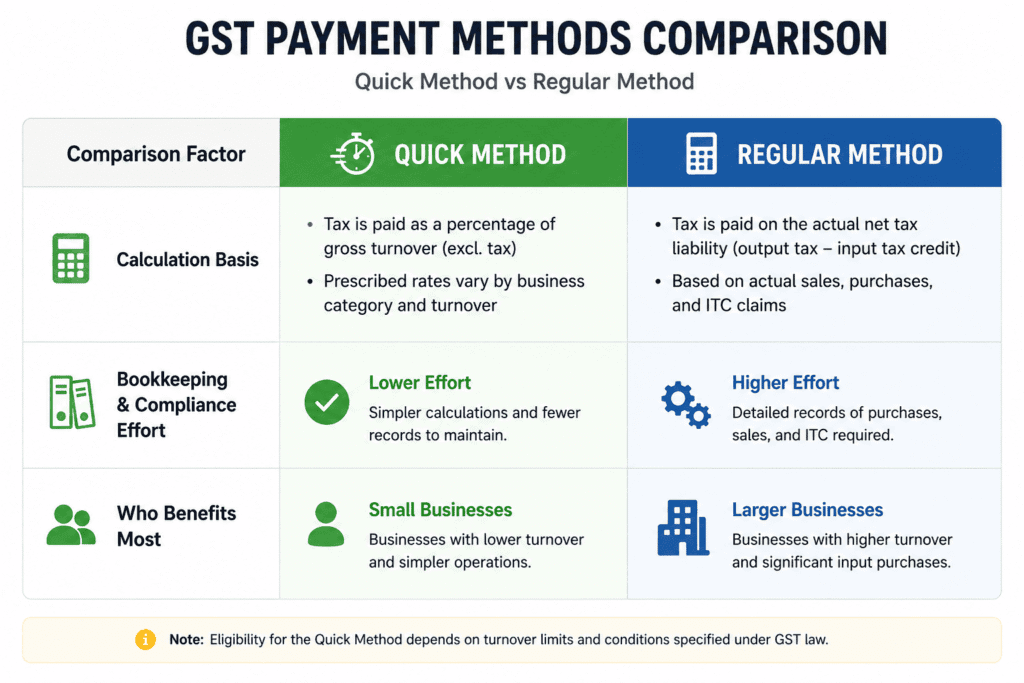
The Quick Method is a simplified way to calculate GST/HST remittance. Instead of tracking input tax credits on every expense, you apply a fixed remittance rate to your total sales, including tax collected, and keep the difference.
The regular method, by contrast, requires you to calculate exact GST/HST collected minus exact input tax credits claimed, expense by expense. It is more precise but takes more bookkeeping effort.
This comparison is for small and mid-sized e-commerce sellers deciding which method fits their expense structure, particularly those with straightforward operations and limited large purchases.
Why Choosing the Right Method Matters
The wrong method choice costs real money over a fiscal year, not just administrative time. A seller with low expenses relative to revenue often keeps more cash under the Quick Method. A seller with significant equipment or software purchases often benefits more from claiming detailed input tax credits under the regular method.
The choice also affects your bookkeeping workload. The Quick Method requires far less transaction-level tracking, which appeals to sellers running lean operations without dedicated bookkeeping support.
Switching later is possible but has rules and timing restrictions, so getting this decision right at registration, or shortly after, avoids unnecessary back-and-forth with the CRA.
Step-by-Step Guide to Choosing and Electing a Method
Step 1: Check Your Eligibility for the Quick Method
Most small businesses qualify, but there are annual taxable revenue limits and certain business types are excluded, including accountants, lawyers, and financial consultants. Confirm eligibility on the CRA’s Quick Method page before electing.
Step 2: Estimate Your Input Tax Credits Under the Regular Method
Review recent expenses to estimate how much GST/HST you would recover through input tax credits. If this figure is small relative to revenue, the Quick Method likely saves more. Our guide to GST/HST input tax credits explains what typically qualifies.
Step 3: Compare the Two Calculations Side by Side
Run both scenarios using a recent quarter’s actual numbers. Calculate net tax owed under the regular method, then calculate it again using the applicable Quick Method remittance rate on the same revenue. Compare which leaves more cash in the business.
Step 4: File the Election with the CRA
If the Quick Method suits your business, file Form GST74 to make the election. It generally takes effect at the start of a reporting period, so timing matters if you want to switch mid-year.
Step 5: Update Your QuickBooks Online Setup
Once elected, your bookkeeping changes. You will still record GST/HST collected, but ITC tracking becomes far less relevant day to day. Make sure this is reflected correctly before your next filing in QuickBooks Online to avoid double-counting credits you can no longer claim in full.
Step 6: Revisit the Decision Annually
Business expenses change as you grow. A seller who invests heavily in equipment or software one year may benefit more from switching back to the regular method the next. Review the comparison annually rather than assuming the original choice still fits.
Practical Tips for Better Results
Run the comparison with real numbers, not estimates. A rough guess in either direction can lead to a costly year-long commitment to the wrong method.
Common mistake: electing the Quick Method without checking industry exclusions first. Certain professional services do not qualify regardless of revenue.
Common mistake: forgetting that the Quick Method still requires collecting GST/HST at the full posted rate from customers. The savings come from the remittance calculation, not from charging customers less.
Efficiency tip: keep both calculations in a simple spreadsheet each year at tax planning time, so switching methods is a five-minute decision instead of a guessing game.
Conclusion
Neither method is automatically better. The right choice depends on your expense structure and how much you would actually recover through input tax credits. Run the comparison with real numbers before electing, and revisit it every year as your business changes.
Not sure which method fits your numbers? Book a free consultation and we will run the comparison using your actual filing history.
By:

Ashfaq helps e-commerce business owners turn messy numbers into clear, reliable financials. With over 15 years of experience, he specializes in bookkeeping for Amazon and Shopify sellers, ensuring accuracy, clarity, and confident decision-making.
Categories
Latest Posts
- August 2, 2026
Amazon Seller Connector by QuickBooks: Complete Guide
- July 21, 2026
How COGS Accounting Works for Canadian FBA Sellers
Tags
A2X
Accounting Method
Amazon FBA
Amazon Marketplace Connector
Amazon Seller Central
Amazon Seller Connector
Bookkeeping Tips
Canada Tax Registration
Canadian Bookkeeping
Canadian Sales Tax
Chart of Accounts
COGS
E-Commerce
E-Commerce Bookkeeping
Finance
Financial Statements
GST/HST
Inventory
Payout Reconciliation
Profit and Loss
QuickBooks Online
Sales Tax
Sales Tax Compliance
Shopify
TaxCloud