QuickBooks Bookkeeping for Amazon FBA & Shopify | Thelonex


What Is Quebec QST and How Does It Work?
- Home
- What Is Quebec QST and How Does It Work?
- July 19, 2026
- 5 min read
- No Comments

What Is Quebec QST and How Does It Work?
Quebec runs its own separate sales tax system, and it trips up more sellers than any other province. GST/HST registration alone does not cover you here. Quebec requires its own registration, its own return, and its own filing agency.
This guide explains what Quebec QST is, who needs to register, and how to file correctly alongside your federal GST obligations. For the broader picture on Canadian tax rules, start with our Canadian GST/HST guide.
What Is Quebec QST?
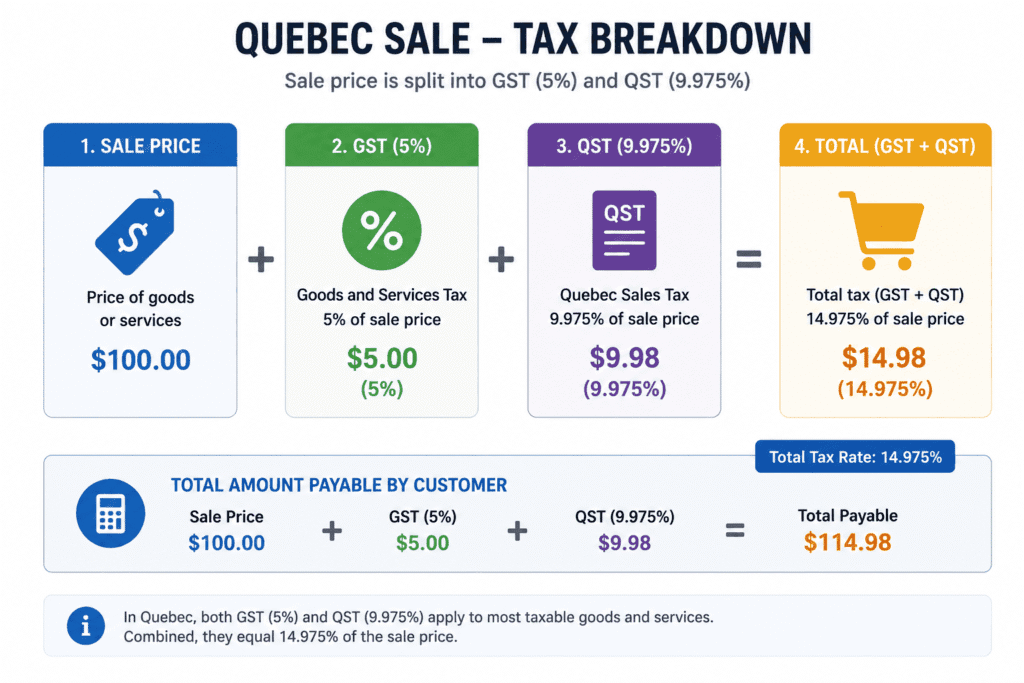
QST stands for Quebec Sales Tax. It is a provincial tax of 9.975% administered by Revenu Québec, not the Canada Revenue Agency. It applies on top of the federal 5% GST, bringing the combined rate on most goods and services sold in Quebec to 14.975%.
Unlike HST provinces where one combined rate is collected and remitted through a single system, Quebec keeps GST and QST as two separate taxes with two separate registrations, two separate returns, and two separate filing deadlines. Our GST/HST rates by province guide covers how Quebec compares to every other province at a glance.
This guide is for e-commerce sellers, whether based in Quebec, elsewhere in Canada, or in the US, who ship taxable goods to Quebec customers and need to understand their QST obligations separately from their GST/HST registration.
Why Quebec QST Matters for E-Commerce Sellers
Registering for GST/HST does not automatically register you for QST. This is the single most common mistake we see among sellers expanding into Quebec, and it means tax owed on Quebec sales goes uncollected until someone catches the gap.
Missing QST registration creates the same exposure as missing GST/HST registration: back taxes on sales already made, calculated after the fact, with no way to collect it from customers who already paid. The financial risk compounds because you are now dealing with two tax authorities instead of one.
Getting QST right also unlocks refunds. Registered businesses can claim a QST input tax refund, the QST equivalent of a federal input tax credit, on eligible Quebec business expenses. Sellers who track only GST/HST input tax credits and ignore QST leave this money unclaimed.
Step-by-Step Guide to Quebec QST Compliance
Step 1: Confirm You Have Crossed the Threshold
QST registration follows the same small supplier threshold logic as GST/HST: $30,000 CAD in worldwide taxable revenue within a calendar quarter or over four consecutive quarters. If you have already registered for GST/HST under this threshold, check whether you have separately registered for QST, since the two are not automatically linked.
Step 2: Register With Revenu Québec
QST registration happens through Revenu Québec’s online services, a completely separate system from the CRA’s Business Registration Online portal used for GST/HST. Non-resident businesses, including US-based sellers, can register as specified registrants under Quebec’s simplified QST system if they meet the criteria. If you have not yet registered for GST/HST either, our guide on how to register for GST/HST walks through that separate federal process first.
Step 3: Apply the Combined Rate Correctly
QST is calculated on the sale price alone, not on the sale price plus GST. Charge 5% GST and 9.975% QST separately, shown as two distinct line items rather than one blended percentage, since Revenu Québec expects to see both amounts reported independently.
Step 4: Configure Your Sales Channels for Quebec
In Shopify, add your QST number alongside your GST/HST number under Canadian tax settings so both taxes calculate correctly for Quebec addresses. Our Shopify GST/HST guide covers the general Canadian tax settings this builds on. On Amazon, confirm your Quebec tax settings are enabled separately, since some sellers only configure the federal GST/HST fields and miss the QST field entirely.
Step 5: File Your QST Return Separately
QST returns are filed through Revenu Québec, on a different schedule and portal than your GST/HST return through the CRA. Keep both filing calendars visible, since missing one while filing the other on time is a common and costly gap. Our guide on filing your GST/HST return in QuickBooks Online explains the federal side; QuickBooks Online can track QST separately in the same way, using its own tax agency setup for Revenu Québec.
Step 6: Claim Your QST Input Tax Refund
Just like GST/HST input tax credits, QST paid on eligible Quebec business expenses can be claimed back and subtracted from what you owe. Review our full guide to GST/HST input tax credits for the underlying logic, since QST input tax refunds follow the same eligibility principles under a separate name.
Practical Tips for Better Results
Treat QST as a completely separate compliance task, not a line item inside your GST/HST process. Different portal, different login, different filing deadline.
Common mistake: assuming a GST/HST number covers Quebec sales. It does not. QST registration is mandatory on its own once you cross the threshold and sell to Quebec customers.
Common mistake: calculating QST on the price after GST has been added. QST is calculated on the base sale price only, and combining the calculation incorrectly overcharges or undercharges customers.
Efficiency tip: set up your QuickBooks Online chart of accounts with separate liability accounts for GST and QST from the start. Untangling blended tax accounts after a year of sales is far more work than setting them up correctly the first time.
Conclusion
Quebec QST is not an extension of GST/HST. It is a separate tax, a separate registration, and a separate filing obligation through Revenu Québec. Sellers who treat it as its own compliance task, with its own account setup and filing calendar, avoid the gap that catches most first-time Quebec sellers.
Not sure if your Quebec sales already require QST registration? Book a free consultation and we will review your Quebec revenue and current registration status together.
By:

Ashfaq helps e-commerce business owners turn messy numbers into clear, reliable financials. With over 15 years of experience, he specializes in bookkeeping for Amazon and Shopify sellers, ensuring accuracy, clarity, and confident decision-making.
Categories
Latest Posts
- August 2, 2026
Amazon Seller Connector by QuickBooks: Complete Guide
- July 21, 2026
How COGS Accounting Works for Canadian FBA Sellers
Tags
A2X
Accounting Method
Amazon FBA
Amazon Marketplace Connector
Amazon Seller Central
Amazon Seller Connector
Bookkeeping Tips
Canada Tax Registration
Canadian Bookkeeping
Canadian Sales Tax
Chart of Accounts
COGS
E-Commerce
E-Commerce Bookkeeping
Finance
Financial Statements
GST/HST
Inventory
Payout Reconciliation
Profit and Loss
QuickBooks Online
Sales Tax
Sales Tax Compliance
Shopify
TaxCloud